Guide
Does my building need ERRCS?
Maybe not. It depends on your state or city's rules and on how well radios work inside the building today. Four questions decide it. Here they are, with how the triggers differ city by city.
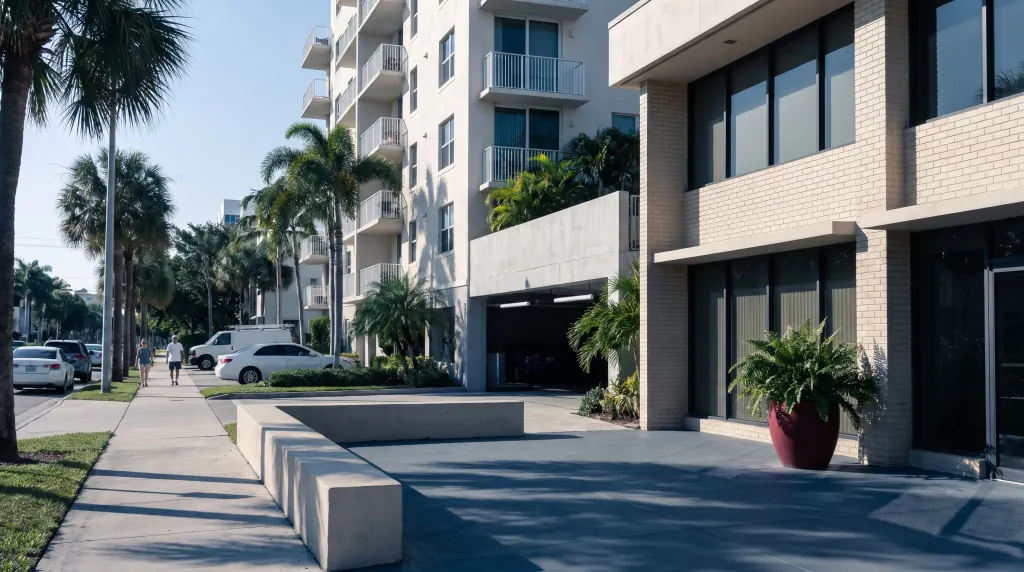
The four questions that decide it
- Where is the building? Your state law and your local fire department's rules set the triggers. Find yours on the requirements pages.
- New or existing? New buildings usually face the full rule. Existing buildings are covered by retrofit rules, which vary the most.
- How big, how tall, how deep? Most triggers use square footage, stories, high-rise status and below-grade areas.
- What is the signal inside? Even a covered building needs a system only if the measured signal falls short. Under the model code, coverage is judged against the public safety signal measured at the outside of the building (IFC 2021 510.1), and Florida says no system or assessment is required if the signal is inadequate at the exterior (F.S. 633.202(18)(e)).
The building checker walks through these questions for the jurisdictions we cover and cites the source for every answer.
Does it apply
Four questions decide whether your building needs ERRCS
- Where is the building?State law and your local fire department set the triggers.
- New or existing?New buildings face the full rule; retrofit rules for existing ones vary the most.
- How big, how tall, how deep?Square feet, stories, high-rise status and below-grade areas.
- What is the signal inside?A covered building needs a system only if the measured signal falls short.IFC 2021 510.1; F.S. 633.202(18)(e)
- Your answerThe checker applies each published rule and cites it. Your fire marshal confirms.
How triggers compare
This table lists new-building triggers and existing-building rules as published in each document. Open the jurisdiction page for the full rule and its exceptions.
| Jurisdiction | New buildings | Existing buildings | Source |
|---|---|---|---|
| Florida (statewide) | All buildings must meet the local minimum signal; exempt: 1-2 family and townhouses, under 12,000 sq ft with no underground areas, low-rise apartments and lodging with exterior exits, some wood-frame apartments | Existing high-rises: permit by January 1, 2024, comply by January 1, 2025 | F.S. 633.202(18) |
| San Diego, CA | All high-rises; low-rise with 3+ stories, over 20,000 sq ft, or larger basements (test, then system if failed); R-3 excepted | High-rise without wired phone system: test, install within 3 years if failed | SDFD guideline II |
| San Francisco, CA | All new buildings; test low-rise after construction; exempt: one story, 12,000 sq ft or less, no basement | High-rise without wired phone system: test, install within 3 years if failed; change of occupancy triggers a test | SFFD AB 2.01 Addendum G, I |
| Los Angeles, CA | Where signal is below code and: more than 3 stories, 50,000+ sq ft, basement 10,000+ sq ft, 2+ levels below grade, or 20,000+ sq ft with solar PV; R-3 excepted | Same conditions, when the fire alarm system is replaced | LAFD Requirement #105 |
| Houston, TX | All buildings except those with no basement, 3 stories or less and 50,000 sq ft or less | Remodels and lease buildouts must document compliance | Houston CE-1350 |
| Phoenix, AZ | Benchmark RF test decides; policy lists under 3 stories and under 12,000 sq ft as exemption criteria | Same policy covers existing buildings meeting PFC 1103.2 | Phoenix Explanatory Policy |
| Washington (statewide) | All new buildings, based on exterior signal | Non-R-3 buildings when a wired system fails or is replaced, or on a local timeline | WAC 51-54A-0510, 1103.2 |
| Seattle, WA | High-rises; 50,000+ sq ft; basement 10,000+ sq ft; occupied floors 30+ ft below exit discharge | High-rise with no wired system or coverage must retrofit | SFD CAM 5123 |
Without a system
Where firefighters' radios go quiet
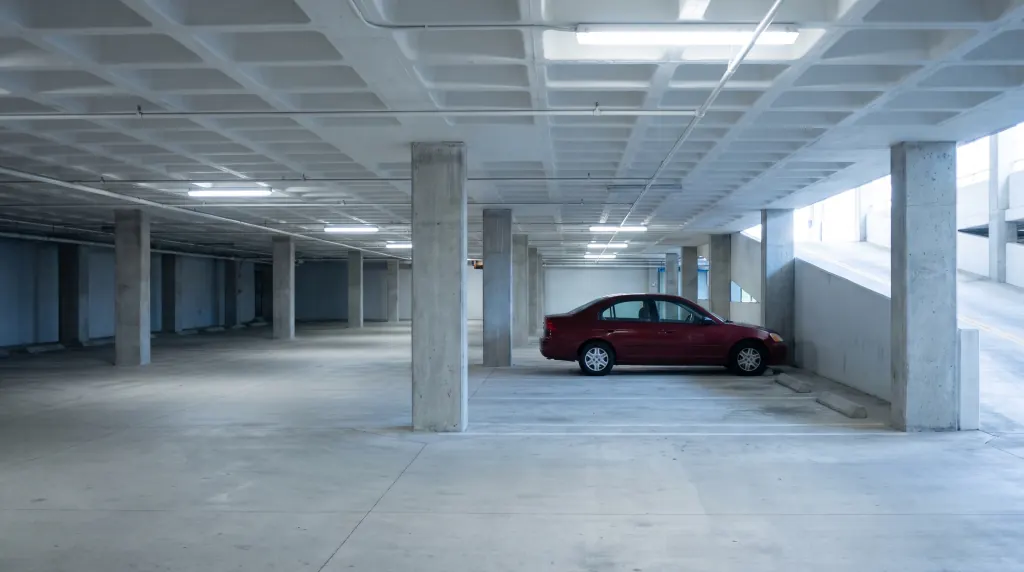
- Below-grade garage levelsSoil and concrete block radio. Basements and parking levels are where radios most often drop out.BDA system guide; IFC 2021 510.1
- Stair shaftsExit stairs are critical areas: the target there is 99 percent coverage.NFPA 1225 (2022) 18.8.3; IFC 2021 510.4.1
- Elevator coreElevators and elevator lobbies are critical areas too.NFPA 1225 (2022) 18.8.3
- Interior rooms behind concreteThick walls, steel and coated glass weaken the signal floor by floor.
- The signal outsideCoverage inside is judged against what reaches the outside of the building. In Florida, if it is inadequate outside, no system is required.IFC 2021 510.1; F.S. 633.202(18)(e)
If your city is not listed
Ask your fire marshal three things: which fire code edition and amendments apply, whether they publish ERRCS technical criteria (the model code requires one, IFC 2021 510.4.2.2), and whether existing buildings have a retrofit deadline. We add a jurisdiction only after reading its own documents. New and updated pages are listed on our changelog.
If you already have a notice
Read what to do after a fire marshal notice. It covers deadlines, who to hire and what records to keep.
This is guidance, not engineering advice. Confirm with your fire marshal (AHJ).
Next step
Take the board a plan, not just a problem
Ask for up to 3 quotes from vetted installers who serve your area, or start with a one-page brief the board can read before the next meeting. Free for owners, boards and managers. No texts, no cold calls.
Questions people ask
My building passed its last inspection. Can it still need ERRCS?
Yes. Retrofit rules for existing buildings can apply regardless of past inspections. Florida's statute, for example, set January 1, 2025 as the date existing high-rises had to comply (F.S. 633.202(18)(a)), and a fire marshal can require a signal assessment on a schedule the statute sets.
Is a small building ever required to have ERRCS?
It can be, mostly because of basements or a weak local signal. In Florida a building under 12,000 total gross square feet is exempt only if it has no underground areas (F.S. 633.202(18)(h)2). San Diego's guideline covers new buildings with a basement over 2,500 sq ft.
Does "required" mean I must install a BDA?
Not always. In most codes, required means the building must have adequate coverage. If a signal test shows the building already has it, no system is installed. The model code bases coverage on the signal measured outside the building (IFC 2021 510.1).
Sources
Primary documents we read for this page. Rules change; confirm with your fire marshal (AHJ).
- Florida Statutes 2026, section 633.202, subsection (18), The Florida Senate
- International Fire Code 2021, Section 510 (text as published by the City of Eaton), City of Eaton, reproducing the ICC International Fire Code
- San Diego Fire-Rescue ERRCS guideline (9/22/23), City of San Diego
- Administrative Bulletin 2.01 (2025), Addendum G, San Francisco Fire Department
- Requirement, Los Angeles Fire Department
- Emergency Responder Communication Coverage (ERCC) Guideline, Form CE-1350 (revised July 2025), City of Houston
- Client Assistance Memo 5123 (November 2024), Seattle Fire Department
- Fire Prevention Section Explanatory Policy Manual 2026, Emergency Responder Radio Coverage, City of Phoenix Fire Department
- WAC 51-54A-0510, Emergency responder communication coverage, Washington State Legislature
Related
Does the radio coverage rule apply to your building?
Answer a few questions about your building and see what the published fire code rules say for your jurisdiction, with the source for every line.
What is ERRCS?
ERRCS means in-building radio coverage for firefighters and police. Why fire codes require it, who sets the rules, who pays, and what owners must do.
ERRCS requirements where your building is
Source-cited emergency responder radio coverage rules by state, county and city: exemptions, signal levels, testing, permits and deadlines.
You got a fire marshal notice about radio coverage. Now what?
A step-by-step plan for owners and managers after an ERRCS or BDA notice of violation: read the deadline, test, hire qualified help, get consent and permits.