Got a citation?
You got a fire marshal notice about radio coverage. Now what?
Take it seriously, and take a breath. The steps are the same almost everywhere, and in Florida you get at least one year from the notice to finish a required retrofit (F.S. 633.202(18)(g)). Read the notice first, then work down this list.
Step 1: Read the notice closely
Write down four things from the notice: the code section cited, the deadline, the contact at the fire department, and what it asks for (a test, a permit application, a working system, or a report). Notices differ by city, and the date on yours controls.
- In Florida, the statute gives you at least 1 year from the notice of code violation to complete a required retrofit after the statutory dates (F.S. 633.202(18)(g)).
- Elsewhere, existing-building timelines are local. San Diego and San Francisco, for example, give existing high-rises without a wired fire department phone system up to 3 years after a failed radio test to install a system (SDFD ERRCS guideline II.B.3; SFFD AB 2.01 Addendum G, I.D).
After a notice
Six steps from the letter to a closed violation
- Read the noticeWrite down the code section, the deadline, the contact and what it asks for.
- Check the ruleRun the checker for your building and look for a published exemption.
- Get a signal testYou cannot size a fix without measuring floor by floor.IFC 2021 510.4.2.2
- Hire qualified peopleFCC general radio operator license and in-building training, at minimum.IFC 2021 510.5.3
- Consent, permit, install, testRadio licensee's consent, a permit, then the acceptance test.47 CFR 90.219(b)(1)(i); IFC 2021 510.3, 510.5.4
- Keep it compliantAn annual test and a report to the fire department, records kept on site.IFC 2021 510.6.1
In Florida, a required retrofit after the statutory dates gets at least 1 year from the notice of code violation (F.S. 633.202(18)(g)). Elsewhere, the date on your notice controls.
Your notice
How long do we have?
Every date here comes from the statute or rule cited under it.
In Florida, after the fire marshal issues a notice of code violation, the owner gets at least 1 year to complete a required retrofit. The date written on your notice controls; it may give you more. F.S. 633.202(18)(g)
Step 2: Check whether the rule applies to your building
Run the building checker. It applies every published exemption for the jurisdictions we cover, cites the source, and lists the questions it could not answer. If you think the building is exempt, raise it with the fire department in writing, with the citation.
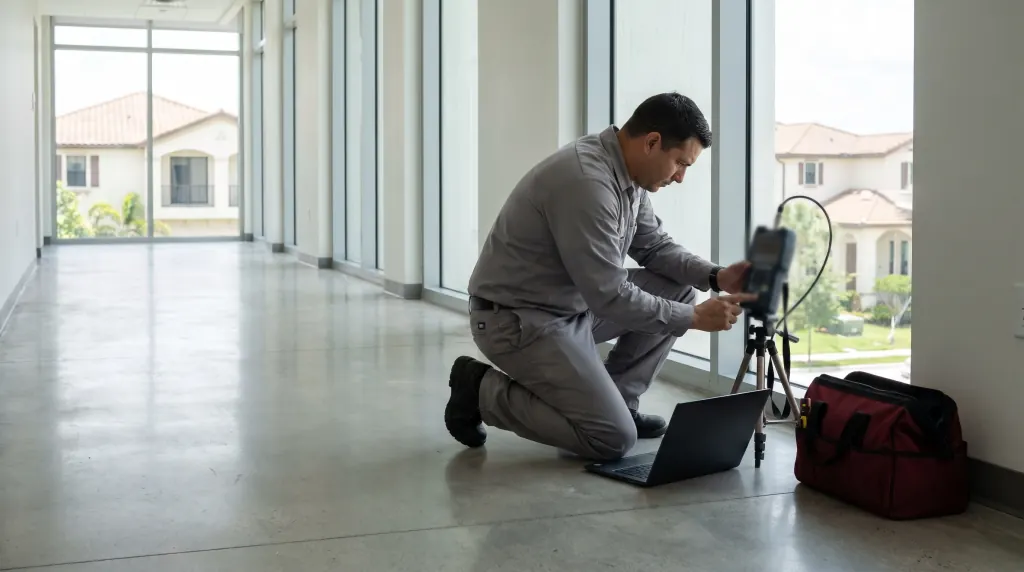
Step 3: Get a signal test
You cannot size a fix without measuring. A test or survey shows which floors and areas fail. Some cities require it before any installation; Houston, for example, requires a test before any BDA goes in (Houston CE-1350). Ask the fire department whether it publishes technical criteria; the model code says the fire code official keeps a document with frequencies and design details (IFC 2021 510.4.2.2).
Step 4: Hire qualified people
At a minimum under the model code, the system designer and lead installer need a valid FCC general radio operator license and in-building system training (IFC 2021 510.5.3). Your city may add more, such as a licensed engineer's seal. Your city page lists local credentials where they are published.
Get written quotes on the same scope so you can compare them line by line. BDA system cost lists what a complete quote includes. If you want competing quotes, request up to 3. Your request goes to up to 3 vetted installers who serve your area. We send no texts and make no cold calls.
Step 5: Consent, permit, install, test
- Consent. The radio licensee (usually the city, county or regional radio system) must give express consent before a non-licensee operates a booster, kept in a recordable format (47 CFR 90.219(b)(1)(i)). Florida requires the same for any new system or change to an existing one (F.S. 633.202(18)(d)).
- Permit. A construction permit is required to install or modify a system (IFC 2021 510.3).
- Install and acceptance test. The system is tested floor by floor after installation (IFC 2021 510.5.4). See BDA testing.
- Close the notice. Send the fire department what it asked for (often the acceptance report and permit sign-off) and get written confirmation that the violation is resolved.
Step 6: Keep it compliant
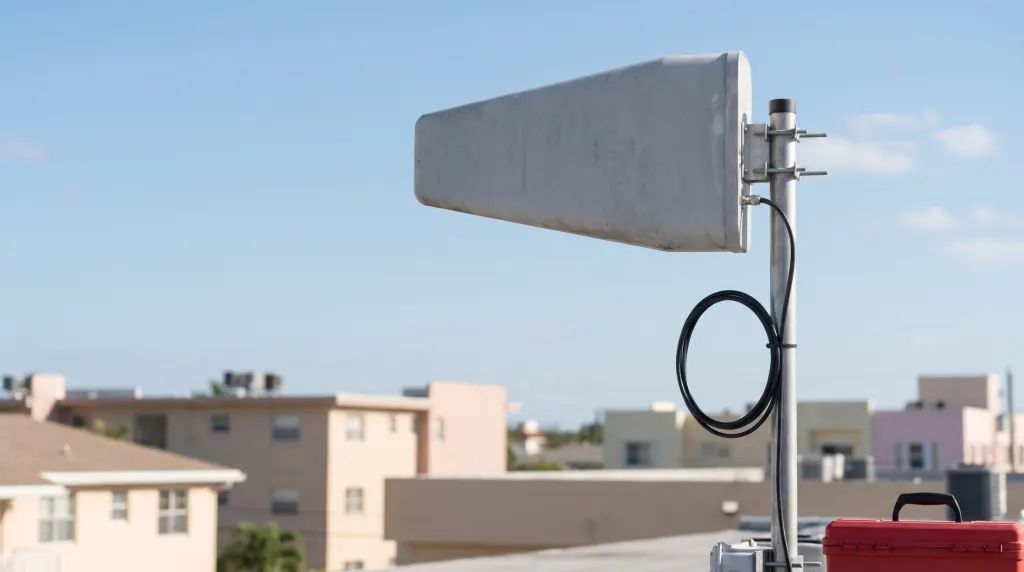
After the fix, the system needs an annual test and a report to the fire department (IFC 2021 510.6.1). Keep the acceptance report and amplifier gain values; losing them can mean redoing the acceptance test (IFC 2021 510.5.4 item 6). The annual inspection guide covers the yearly routine.
Keep the board and owners informed
If you manage a condominium or association, share the notice, the deadline and the plan with the board early. The Board Brief puts them on one printable page, the condo board page explains it all to owners in plain words, and the week-one plan for managers covers your side.
This is guidance, not legal or engineering advice. Confirm every step with your fire marshal (AHJ).
Take this to your board
Make a one-page board brief
Plain English, the rule for your building with its citation, the deadlines, sourced cost figures, six questions to ask installers and a QR code for quotes. Print it or save it as a PDF.
- Free, and nothing is stored
- Fits on one letter-size page
- Every rule and figure cites its source
Next step
Take the board a plan, not just a problem
Ask for up to 3 quotes from vetted installers who serve your area, or start with a one-page brief the board can read before the next meeting. Free for owners, boards and managers. No texts, no cold calls.
Questions people ask
How long do I have to fix an ERRCS violation in Florida?
If the fire marshal requires an existing building to retrofit its system after the statute's 2024 and 2025 dates, the owner gets at least 1 year to finish. The year starts when the fire marshal cites the owner with a notice of code violation (F.S. 633.202(18)(g)). Your notice may give a specific date; use it.
Can the fire marshal require more than state law in Florida?
Not for whether a system is required, or how it is designed or installed. F.S. 633.202(18)(i) bars local fire marshals from enforcing stricter requirements than the Florida Fire Prevention Code and the statute on those points.
Should I appeal?
That is a question for your attorney. Before deciding, check whether your building fits a published exemption (the checker applies them) and whether the outside signal is the problem. In Florida, if the fire marshal finds the signal inadequate at the building's exterior, no system or assessment is required (F.S. 633.202(18)(e)).
Sources
Primary documents we read for this page. Rules change; confirm with your fire marshal (AHJ).
- Florida Statutes 2026, section 633.202, subsection (18), The Florida Senate
- International Fire Code 2021, Section 510 (text as published by the City of Eaton), City of Eaton, reproducing the ICC International Fire Code
- 47 CFR 90.219, Use of signal boosters, Electronic Code of Federal Regulations
- San Diego Fire-Rescue ERRCS guideline (9/22/23), City of San Diego
- Administrative Bulletin 2.01 (2025), Addendum G, San Francisco Fire Department
- Emergency Responder Communication Coverage (ERCC) Guideline, Form CE-1350 (revised July 2025), City of Houston
Related
Does the radio coverage rule apply to your building?
Answer a few questions about your building and see what the published fire code rules say for your jurisdiction, with the source for every line.
Your building got an ERRCS notice. Here is what it means.
ERRCS in plain English for condo owners and boards: why firefighters need it, the Florida deadlines, reported costs, and what to bring to your next board meeting.
What a BDA system costs, part by part
What drives the cost of a BDA system for firefighter radio coverage, which code rules add cost, and one reported high-rise price, with sources.
Get up to 3 quotes for your building's radio system
Tell us about your building and we will share your request with up to 3 vetted installers who serve your area. Free for owners. No texts, no cold calls.